Fire & Smoke Detection from Cameras vs Traditional Sensors
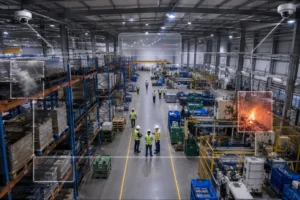
Traditional smoke and heat detectors have protected buildings for decades, but they only react when smoke or heat reaches the sensor. AI fire and smoke detection from cameras takes a different approach. Instead of waiting for a fire to reach a single point, it continuously watches the entire space and detects the visual signs of smoke or flames wherever they appear within the camera’s field of view.
For warehouses, factories, shopping centres, construction sites, logistics hubs, airports and other large facilities, those extra moments can make a significant difference. Camera based fire detection provides earlier visual awareness, precise location information and instant video verification, helping teams respond faster while working alongside existing fire safety systems.
Understanding the Difference Between Cameras and Traditional Fire Sensors
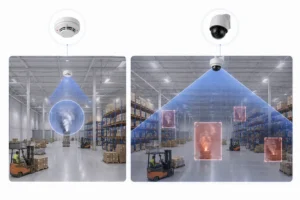
Traditional smoke and heat detectors monitor only the small area around each device. Smoke or rising heat must physically travel to the detector before an alarm can be triggered. In enclosed offices this approach is highly effective, but in large open environments smoke may take longer to reach the sensor, particularly where ceilings are high or ventilation changes the direction of airflow.
AI powered video analytics works differently. Existing CCTV cameras continuously monitor the entire scene, allowing computer vision models to identify visible smoke, flames and other early indicators of fire across the full camera view.
This means the system is not waiting for smoke to reach a detector. It is watching for the first visible signs of a developing incident.
Why Camera Based Fire Detection Responds Earlier
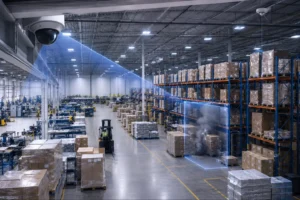
The biggest advantage of camera based fire detection is visibility.
Instead of monitoring one location, a single camera can observe entrances, production areas, storage racks, loading bays or warehouse aisles at the same time. As soon as smoke or flames become visible, the AI can generate an alert together with the exact camera location and supporting video clip.
This gives security teams, facility managers and emergency responders immediate context so they know exactly where to investigate.
Fire Detection in Large Industrial Spaces
Large facilities present unique challenges for traditional detection systems.
Warehouses often have high ceilings where smoke takes time to accumulate. Manufacturing plants contain machinery, conveyors and production lines spread across large areas. Construction sites frequently include temporary structures where installing additional detectors may not always be practical.
Camera based fire detection provides continuous visual coverage across these environments by analysing existing CCTV footage in real time.
Common applications include:
- Warehouses
- Manufacturing facilities
- Logistics centres
- Construction sites
- Airports
- Shopping malls
- Data centres
- Outdoor storage yards
AI Detects More Than Smoke
Modern AI video analytics can recognise multiple visual indicators associated with fire.
These include:
- Visible smoke
- Open flames
- Rapid changes in light intensity caused by flames
- Heat shimmer in certain environments
- Escalating fire behaviour over time
By analysing these patterns together, AI provides faster and more intelligent detection than simple motion based systems.
Existing CCTV Makes Deployment Simple
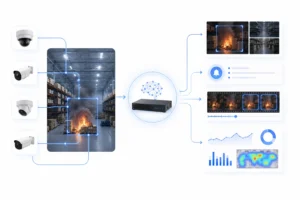
One of the biggest advantages of AI fire detection is that it uses the CCTV infrastructure many organisations already own.
KenVision is camera agnostic, allowing existing security cameras to become intelligent fire monitoring devices without replacing the current surveillance system.
Because processing can take place on premises or at the edge, alerts are generated locally with minimal delay while keeping video within the organisation’s infrastructure.
Camera Detection Complements Traditional Fire Systems
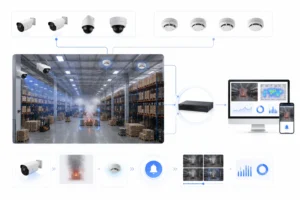
AI camera detection is not intended to replace certified fire alarm systems.
Instead, it strengthens them.
Traditional smoke detectors remain essential for regulatory compliance and life safety. Camera based detection adds an additional layer of early visual awareness by identifying smoke and flames before they reach a detector in many large or open environments.
Together they provide faster awareness, wider coverage and visual confirmation that helps emergency teams respond with greater confidence.
Why Organisations Are Adopting AI Fire Detection
Businesses are increasingly looking for ways to improve fire safety without replacing existing infrastructure.
By combining CCTV with AI video analytics, organisations can:
- Detect smoke earlier across large areas
- Identify the exact location of an incident
- Receive real time alerts
- Verify incidents using live video
- Improve response times
- Reduce unnecessary manual monitoring
- Add intelligence to existing CCTV systems
Conclusion
Every second matters when a fire begins.
Traditional smoke detectors remain a critical part of every fire protection strategy, but they can only react after smoke or heat reaches the device. AI fire and smoke detection from cameras provides an earlier layer of visual awareness by continuously monitoring the entire scene and identifying developing incidents wherever they appear.
For facilities with existing CCTV, this means faster detection, better situational awareness and more informed emergency response without replacing current infrastructure.
Book a 30 minute KenVision demo to see how your existing cameras can become an intelligent fire and smoke detection system.
Frequently Asked Questions
Can AI cameras detect smoke before traditional smoke detectors?
In many large or open environments they can. AI analyses the visible appearance of smoke and flames across the entire camera view instead of waiting for smoke to reach a detector.
Does camera based fire detection replace smoke detectors?
No. It complements traditional fire detection systems by providing earlier visual awareness and precise location information.
Can the system use existing CCTV cameras?
Yes. KenVision is camera agnostic and works with existing CCTV infrastructure, helping organisations add AI powered fire detection without replacing their cameras.
Where is camera based fire detection most useful?
It is particularly valuable in warehouses, factories, logistics centres, shopping malls, airports, construction sites and other large spaces where wide visual coverage is important.
Can AI fire detection work outdoors?
Yes, depending on the camera placement and environmental conditions. It can monitor outdoor storage areas, loading bays and other open spaces where conventional point detectors may not provide sufficient coverage.